
Introduction
When a doctor tells you that radiation therapy is part of your treatment plan, the next question that naturally follows is: what does that actually mean? What happens during a session? Is it painful? What is the machine?
If you are being treated at Curepoint Cancer Center in Dublin, Georgia, that machine is a linear accelerator — often called a LINAC. It is one of the most important pieces of technology in modern cancer care, and understanding how it works can take some of the fear out of the process.
This guide explains what a linear accelerator is, how it delivers radiation, why precision matters so much, and what you can expect during a treatment session.
What Is a Linear Accelerator?
A linear accelerator (LINAC) is a device that generates and delivers high-energy X-rays or electrons to a specific area of the body. It is the standard machine used to deliver external beam radiation therapy — the most common form of radiation treatment for cancer.
The ‘linear’ part of the name refers to how the machine works: electrons are accelerated in a straight line using microwave energy, reaching extremely high speeds before they collide with a target material. This collision generates high-energy X-rays, which are then shaped and directed at the tumor.
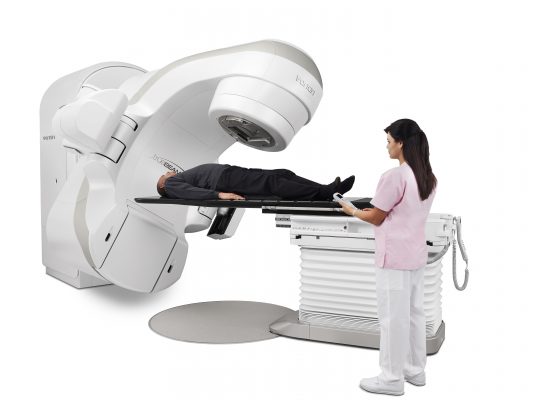
The machine itself looks something like a large arm rotating around a treatment table. It can move in a full arc around the patient, allowing radiation to be delivered from multiple angles — all aimed precisely at the same point inside the body.
Why Precision Matters in Radiation Therapy
Cancer cells and healthy cells are not neatly separated in the body. A tumor sits within or next to healthy tissue — sometimes very close to critical structures like the spinal cord, eyes, or major organs. The fundamental challenge of radiation therapy is delivering enough radiation to destroy cancer cells while sparing as much healthy tissue as possible.
This is where the linear accelerator earns its value. A modern LINAC is capable of targeting tumors with sub-millimeter accuracy. Multileaf collimators — small movable metal plates inside the machine — shape the radiation beam to match the exact contour of the tumor from each angle of delivery.
Curepoint Cancer Center uses advanced LINAC technology to maximize this precision, reducing collateral exposure to surrounding healthy tissue. The result is a treatment that is more effective against the tumor and gentler on the body — which means fewer side effects and a smoother recovery.
How Does the LINAC Actually Work? Step by Step
Here is a simplified breakdown of the physics and process:
- Electron generation: An electron gun fires electrons into a waveguide — a tube through which microwave energy is applied. The microwaves push the electrons faster and faster as they travel through the tube.
- Beam shaping: The high-energy electrons hit a tungsten target, producing X-rays. These X-rays pass through a series of filters and collimators that shape and flatten the beam.
- Patient positioning: You lie on a treatment table that adjusts in multiple directions. The treatment team ensures your position is precisely consistent with the simulation done earlier in planning.
- Beam delivery: The LINAC rotates around you, delivering radiation from several angles. Each angle is carefully calculated to target the tumor from a different direction, concentrating dose at the tumor site while spreading the entry dose across healthy tissue.
- Real-time imaging: Most modern LINACs include imaging capabilities that take pictures of the treatment area right before each session begins. This allows the team to verify your positioning and make micro-adjustments before turning on the beam.
What Types of Cancer Are Treated with a LINAC?
At Curepoint, the linear accelerator is used to treat a wide range of cancers, including:
- Breast cancer — often as post-surgical treatment to eliminate remaining cancer cells
- Prostate cancer — where precision is essential given the proximity to the bladder and rectum
- Lung cancer — including stereotactic body radiation therapy for small, early-stage tumors
- Head and neck cancer — where surrounding nerves and structures demand extreme accuracy
- Bladder cancer, colorectal cancer, gynecologic cancer, and skin cancer
Each treatment plan is individualized. The number of sessions, the radiation dose per session, and the exact angles of delivery are all tailored to the specific tumor — its size, location, and the overall health of the patient.
What Does a Radiation Therapy Session Feel Like?
One of the most common fears people have about radiation therapy is that it will feel like something — that they will sense the radiation entering their body or experience pain during the session. In reality, external beam radiation therapy delivered by a LINAC is completely painless. You feel nothing during the actual treatment.
A typical session at Curepoint lasts between 15 and 30 minutes in the treatment room, though the actual radiation delivery may only take a few minutes of that time. The rest involves positioning, imaging verification, and setup.
You will be alone in the room during delivery — the therapists monitor you continuously from just outside through cameras and intercom — but you can speak to them at any time. The machine moves around you, but it does not touch you.
Side Effects: What to Expect
Side effects from radiation vary depending on which part of the body is being treated. Because the LINAC targets radiation precisely, side effects are typically localized to the treatment area.
Common side effects include fatigue, skin changes (similar to a sunburn) in the treated area, and localized irritation of nearby structures. For example, prostate cancer radiation may temporarily affect urination or bowel habits; head and neck radiation can affect saliva production.
The team at Curepoint discusses all potential side effects with you before treatment begins and provides supportive care throughout — from nutritional guidance to management strategies. Our cancer care approach is designed to address not just the tumor but the whole person.
Your First Step: Consultation at Curepoint Cancer Center
If you or someone you love has been diagnosed with cancer and radiation therapy has been recommended — or if you want to understand your treatment options — Curepoint Cancer Center is here for you in Dublin, Georgia.
Our team of oncologists, radiation therapists, and support staff will answer every question, explain every step, and be with you through every session. Cancer treatment does not have to be something you navigate alone or far from home.
Contact us today at (478) 272-2255 or visit us at 2406 Bellevue Avenue, Suite 7, Dublin, Georgia. Learn more about our cancer care philosophy and what sets Curepoint apart.